A Stone Shelf for Your Shower | Where Function Meets Style
A stone shelf does something plastic caddies and wire racks can’t: it turns a shower corner into a built-in design feature while handling everyday storage. The finish, the height, and the position all affect how well it works and how good it looks. Here’s how to decide where a stone corner shower shelf should go, and what to look for before you buy.
Why Choose a Stone Shelf for Your Shower?
Stone is dense, visually consistent with tile and vanities, and holds its shape in steamy rooms, so a stone shelf looks like part of the bathroom rather than an accessory. Particleboard and plastic can sag or warp over time, and stone finishes range from bright whites to deep blacks.
GoShelf’s stone shower shelves come in 17 finishes, including Carrara White, Light Travertine, Sparkle Grey, and Black Granite, so there’s a match for most tile colors. Because no brackets are visible once it’s installed, the shelf appears to float in the corner.
Where Should a Corner Shower Shelf in Stone Go?
For one shelf, choose the corner farthest from the showerhead at about chest height. That keeps products within easy reach and out of the direct spray, and it leaves the main wall clear. If you need more storage, stack a second shelf in the same corner instead of spreading shelves across the wall.
Placement guides generally put the sweet spot around chest or shoulder height. Shelves set too high force you to stretch, and shelves set too low collect splashes and are awkward to use. Small showers do best with one or two corner shelves, while a family bathroom benefits from shelves at different heights, with taller users reaching the top and children or frequently used items sitting lower.
How Does Placement Change the Look of a Stone Shelf?
Placement shapes the style as much as the function. A single stone shelf at chest height looks clean and minimal, a stacked pair looks built in, and lining a shelf up with a horizontal grout line makes it appear to belong to the tile layout.
Finish matters too. A light stone such as Carrara White blends into white tile for a seamless look, while a dark stone like Black Granite adds contrast against a light shower. Match the finish to the tile, or choose a contrast on purpose, and keep the shelf away from the spot where the water hits hardest.
Which Stone Finish Should You Choose?
Start with your tile’s undertone. Light stones such as Carrara White, White, or Sparkle White blend into bright tile, warm stones such as Sand, Light Travertine, or Noce Travertine suit cream and beige walls, and Black Granite or Dark Gray adds contrast against light tile.
If you’re torn between two finishes, GoShelf also offers a sample pack, so you can hold the stone against your tile in your own bathroom light before you order.
Stone Shelf vs. Shower Niche or Caddy: Which Fits Your Bathroom?
A stone shelf gives you permanent storage without opening the wall. A niche is built into the wall cavity, which usually means framing, waterproofing, and retiling, while caddies and racks hang or lean and tend to swing, slip, or trap water. For a bathroom that’s already tiled, a retrofit shelf is the lower-effort route.
A niche still makes sense when you’re gutting the shower anyway and want more capacity. Many homeowners keep it simple and add one stone shelf where the reach is most natural.
Is a Stone Corner Shelf Hard to Install?
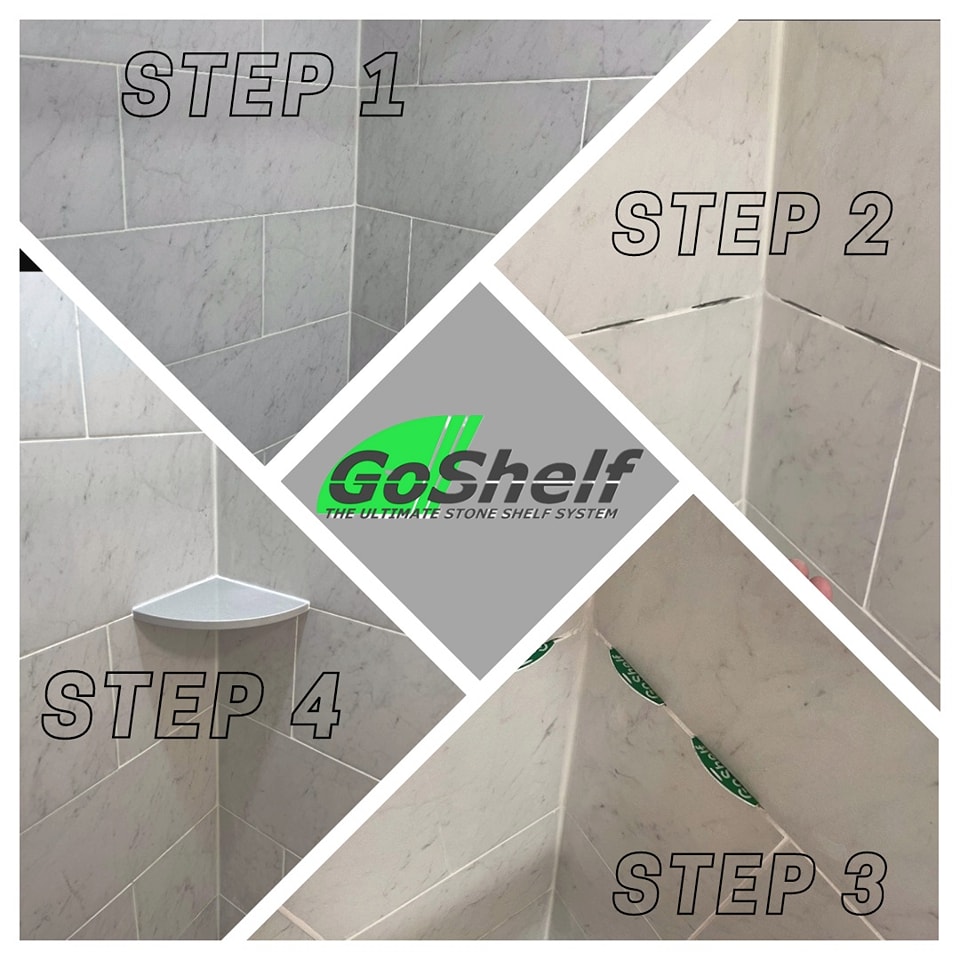
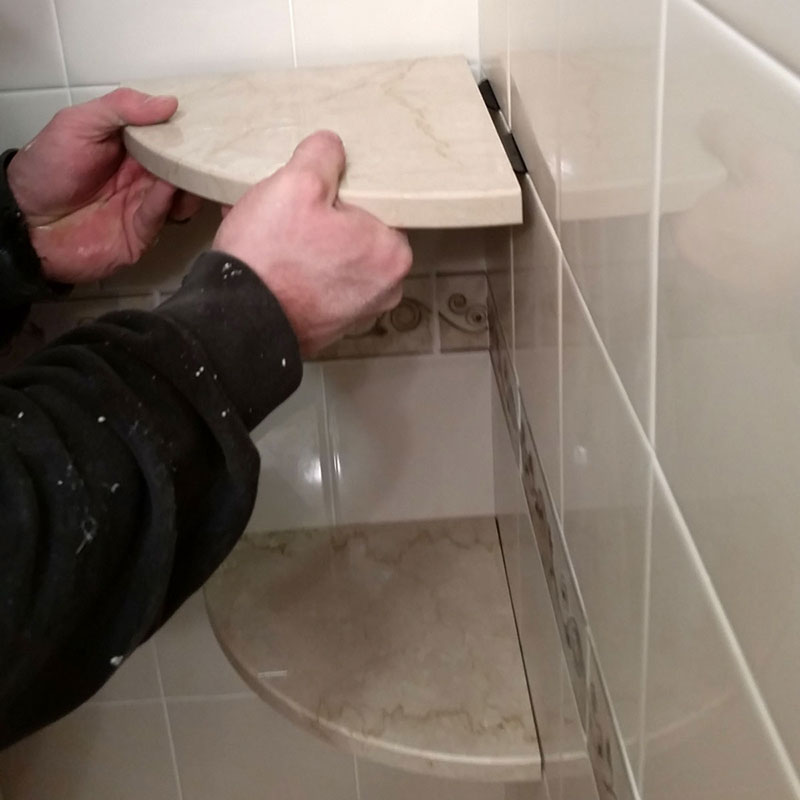
Not with a retrofit system. GoShelf mounts to finished tile. You remove a channel of grout about 3 inches wide and a half inch deep, glue four anchoring plates in place, and slide the shelf on, with no tile removal or wall demolition.
Your tile’s horizontal grout lines guide the height, and you mark 2 1/2 and 6 1/2 inches from the inside corner on both walls to show where the grout comes out. Plan on 3 to 4 hours for the glue to dry, then finish the edges with matching grout or caulk. The system is designed for DIY installation, though patterned tile may call for an experienced tradesperson.
Ready to Add a Stone Shelf to Your Shower?
Each GoShelf System includes the shelf, glue, anchoring plates, a razor blade, and instructions, in 7-, 8-, and 9-inch sizes starting at $59.95. Buy three or more and shipping is free. Browse the GoShelf System or call us at 267-603-5052. For more inspiration, see our smart shower shelf ideas for a serene space.
Key Takeaways
- A stone shelf looks built in and holds its shape in a humid shower.
- One shelf at about chest height in the corner farthest from the showerhead is a reliable starting point.
- Stack a second shelf in the same corner for more storage instead of spreading shelves across the wall.
- Match the stone finish to your tile for a seamless look, or contrast on purpose.
- GoShelf installs on finished tile with a small grout channel, so no tile has to come out.
FAQ
What height should a stone shower shelf be?
Chest height works well for a single shelf. If several people share the shower, add a lower shelf for children or shorter users.
How many stone shelves do I need?
Small showers usually do well with one or two corner shelves. Add more only if the first ones can’t hold your daily products.
Can a stone shelf be installed on existing tile?
Yes. GoShelf is a retrofit system that mounts to existing tile, so you only remove a small channel of grout for the anchoring plates.
What stone finishes does GoShelf come in?
There are 17 finishes, including Carrara White, Light Travertine, Sparkle Grey, and Black Granite.