Corner Bathtub Shelf Vs. Corner Niche
If you’re planning a bathroom upgrade, you’ve probably run into the same question thousands of homeowners ask before a tub or shower renovation: should you install a bathtub shelf or build a corner niche? Both solve the same everyday problem — where to put shampoo, soap, and razors without cluttering the tub ledge — but they get there in very different ways. A niche is a recessed pocket built into the wall itself, while a bathtub shelf sits on top of the tile, anchored into the corner where two walls meet. The right choice usually comes down to your budget, your timeline, and whether you’re renovating from scratch or working with a bathroom that’s already tiled. Below, we’ll look at how each option works, what it costs in time and materials, and why a shelf for bathtub storage tends to be the more practical route — especially if you’re not tearing your bathroom down to the studs.
What Is a Corner Niche?
A corner niche is a recessed storage pocket built directly into the wall between two studs. Because it sits inside the wall cavity rather than on top of it, installing one typically means opening up the drywall or backer board, framing the opening, adding a waterproofing membrane, and then tiling the inside of the niche to match — or intentionally contrast — the surrounding wall. It’s a clean, built-in look that many homeowners love, but it’s also a job that belongs in the new-construction or full-remodel category. You generally need a licensed contractor who understands both tile work and waterproofing, since a poorly sealed niche is a common source of leaks down the road. Framing and plumbing locations can also limit where a niche is allowed to go in the first place.
What Is a Bathtub Shelf, and How Does It Compare?
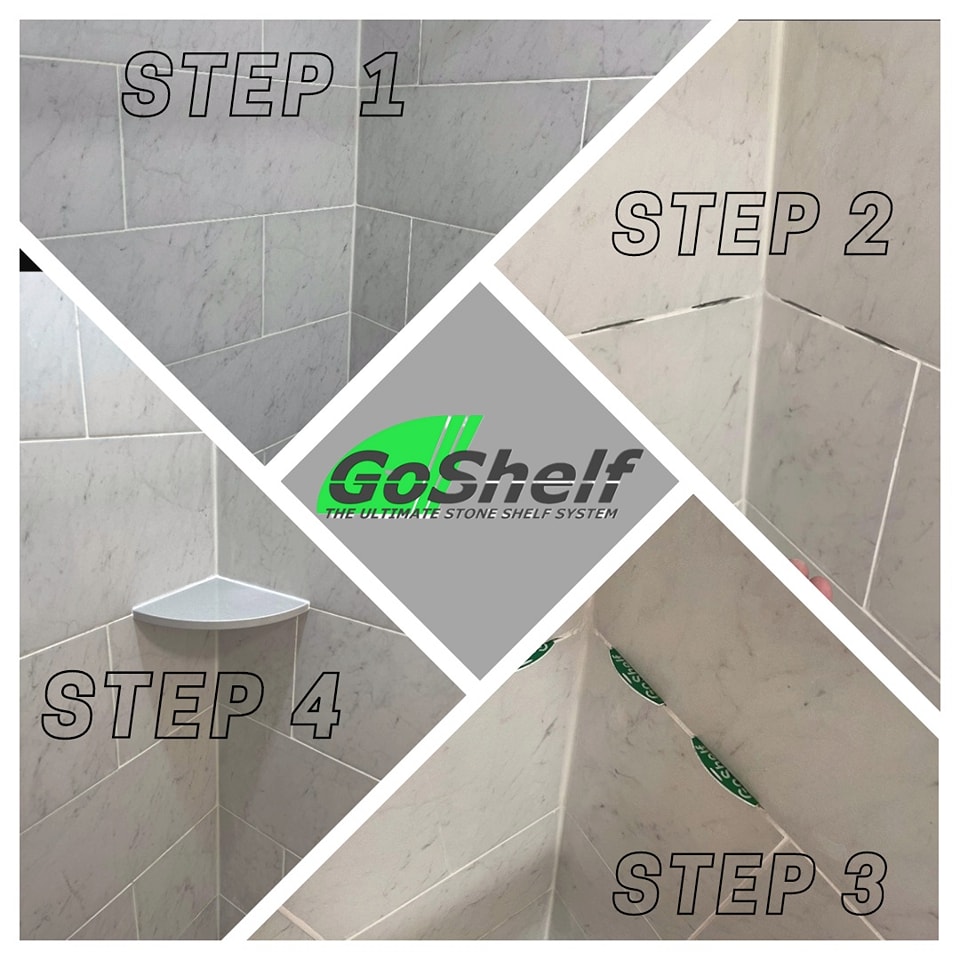
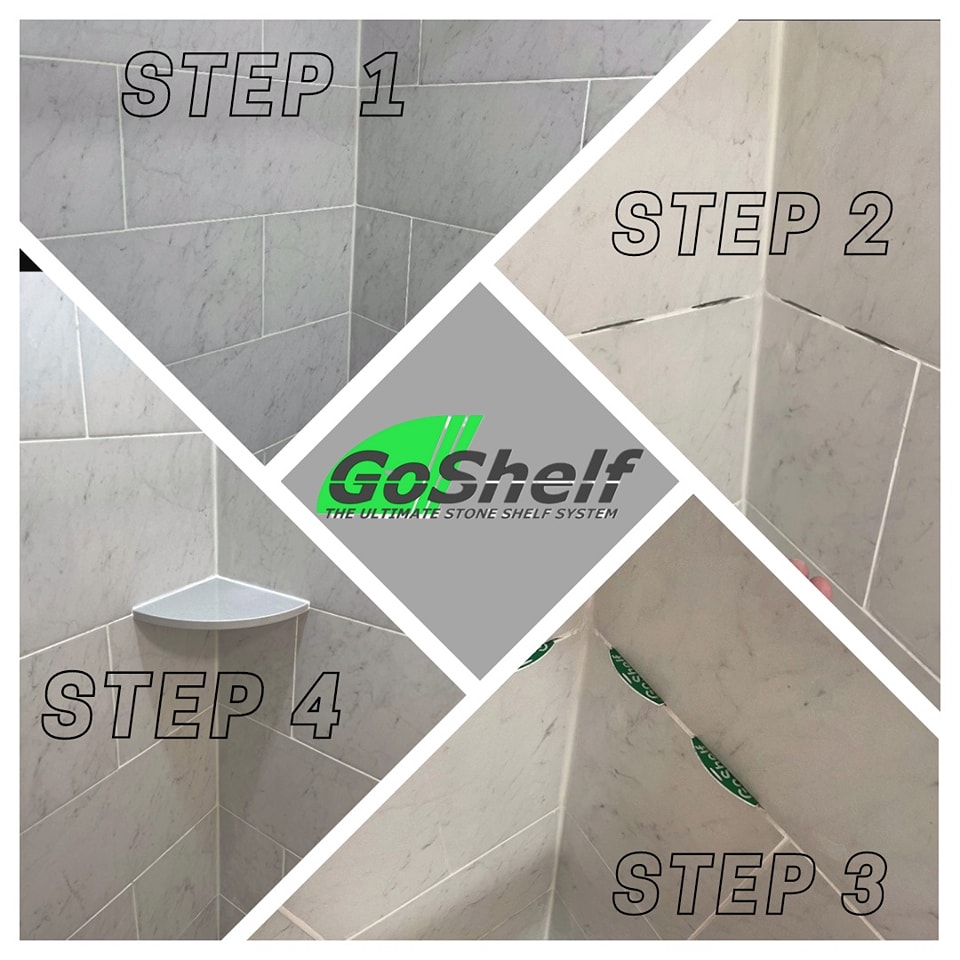
A bathtub shelf takes a different approach. Instead of cutting into the wall cavity, it mounts to the surface of tile that’s already there, anchored into the corner where two walls meet. With a system like GoShelf, installation involves removing a small channel of grout — about 3 inches wide and a half-inch deep — setting anchor plates into that channel, and gluing the stone shelf into place. There’s no reframing, no new waterproofing membrane, and no re-tiling an entire wall. Because the shelf rests on finished tile rather than replacing it, the surrounding wall stays intact, which is exactly why a shelf for bathtub storage has become such a popular alternative for bathrooms that are already built.
Bathtub Shelf vs. Corner Niche: Time, Cost, and Disruption
Line the two options up side by side and the differences show up quickly. A niche requires cutting into the wall, adding blocking or backing, waterproofing, and retiling — work that can add days to a renovation timeline and usually calls for a licensed tile or waterproofing contractor. A bathtub shelf uses the tile and grout that’s already in place, so the work is limited to a small section of grout removal, anchor installation, and adhesive — often finished in an afternoon.
Cost tends to follow the same pattern. A niche involves more materials (backer board, membrane, matching tile) and more labor hours, which adds up on a contractor’s invoice. A corner shelf uses a fraction of the material and labor, which is a big part of why it’s become the go-to option for homeowners upgrading storage without a full remodel budget.
Why a Shelf for Bathtub Storage Works Especially Well in Existing Bathrooms
For a bathroom that’s already tiled, a niche means removing finished tile, disturbing the waterproofing behind it, and re-tiling to match — which gets complicated fast if your original tile is discontinued or hard to source. A bathtub shelf sidesteps that problem entirely, since it’s designed to mount onto finished walls without disturbing what’s behind them.
This was actually the problem GoShelf™ was built to solve. Founder Ian Stefenack spent over 20 years as a tile contractor installing corner shelves the traditional, time-consuming way before developing a faster method that any homeowner or contractor could use. You can see the full lineup of finishes on GoShelf’s shower shelf page, and the step-by-step installation instructions walk through exactly how a shelf goes in without disturbing your existing tile — including on diagonal, herringbone, and hexagon patterns, where a niche would be especially difficult to frame around.
When a Corner Niche Might Still Make Sense
None of this means a niche is a bad choice. If you’re already doing a full gut renovation and the wall is open anyway, a niche can offer more storage capacity and a fully built-in look. It’s really a question of what you’re starting with and how much storage you actually need. As one homeowner summed it up in a long-running Houzz discussion comparing the two, corner shelves cost less but hold less than a built-in niche — a tradeoff worth weighing honestly before you decide.
Key Takeaways
- A corner niche is a recessed, built-in storage pocket that requires opening the wall, waterproofing, and retiling.
- A bathtub shelf mounts to existing tile using anchor plates and adhesive, with no demolition required.
- Shelves are typically faster and less expensive to install than niches.
- Existing bathrooms benefit most from a shelf, since it avoids disturbing tile and waterproofing that’s already in place.
- Niches may still make sense during a full gut renovation, when the wall is already open.
FAQ
Is a bathtub shelf as sturdy as a niche?
Yes. When installed correctly with anchor plates set into the wall, a stone corner shelf is designed to bear the weight of everyday bathroom items without sagging or pulling away from the tile.
Can I add a shelf for bathtub storage without removing any tile?
You don’t need to remove tile from the surrounding wall. A small amount of grout is removed to set the anchor plates, but the tile itself stays intact.
How much does a corner shelf cost compared to a niche?
Costs vary by material and installer, but a corner shelf generally costs less than a niche because it requires far less labor, demolition, and material.
Will a bathtub shelf work with patterned tile?
Yes. Because the shelf can be cut or scribed to fit the wall, it works with diagonal, herringbone, hexagon, and other patterned layouts — something that’s much harder to plan around with a niche.